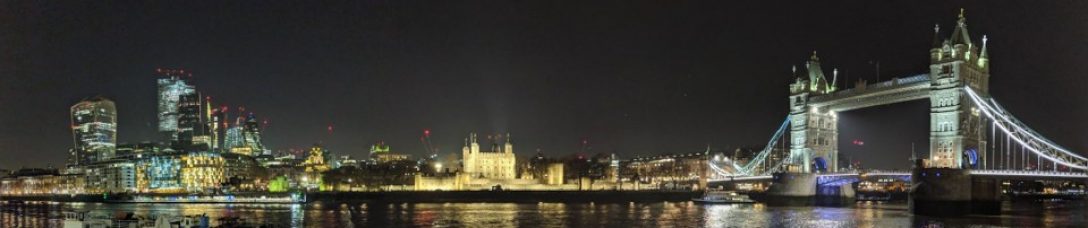
I haven’t seen much of London in October.

I’ve been away every weekend in October, partly in the UK and partly visiting friends overseas.

And now we’re in November, the clocks have gone back, but temperatures haven’t plummeted yet. London feels busy – pubs still have crowds outside.
Finally, the UK’s first Labour budget for 15 years
The big UK political/market news of the month was the new government’s mucn anticipated budget on 30th October. Monevator’s summary is excellent.
What Monevator doesn’t mention is how relentlessly gloomy the runup to the budget was. The government has been clear:
- Taxes are going up, because despite electoral statements to the contrary, those naughty Tories left a ‘black hole’ which, despite numerous commenters pointing out before the election, the Labour highups hadn’t seen coming
- but the key taxes (Income Tax, National Insurance, VAT, Corporation Tax) are not going up, and ‘working people’ (a phrase subject to amusing and relentless parsing in the pre budget runup) are not going to pay more tax
- leaving those who are not ‘working people’ (implication – people with unearned income; they mean us, FIREees) and those with the ‘broadest shoulders’ to pay more tax. Capital gains tax was clearly going to rise, as well as potentially tightening of tax-free pension mechanisms. Non doms were a particular target, as are (those paying for) private schools. In a parallel government narrative universe, the government also was clear it is working to boost private sector investment and woo business – which somehow sounds different from ‘broad shoulders’ doesn’t it?
By the time the budget came around, I’ll be surprised if any of those with the ‘broadest shoulders’ were actually left in the UK, given the horror stories peddled by the Torygraph etc. Whereas in fact the extra taxes on those broad shoulders – primarily increases in non-property capital gains tax rates of 4%, and slightly higher property transaction taxes on 2nd homes – are relatively modest. After the tax rises, you are still paying less than at times under the last Tory government, and less than you could easily pay overseas.
The big tax hike was on employers, via higher National Insurance (social charges, UK version) rates. Experts will tell you that working people will end up paying for this, but personally I think the government is within its rights by saying the test is whether the payslip has shrunk or not, which in the immediate aftermath of these changes it won’t.
What the UK really needs are boosts to its growth, and there wasn’t much to see of that in the budget. While the government talks a decent game on reform / touch choices, there are very few examples to point at so far – and more examples of them refusing to grasp nettles. The above inflation (6.7%) increase in the minimum wage could well drive wage growth and generally such increases haven’t stoken inflation, so maybe we should give that change more credit.
What does the budget do to me and other FIRE types?
In any case I don’t think my tax situation has changed much after the budget. I have broader (taxable) shoulders than most, so me feeling like ‘no change here then’ is revealing.
- No changes to my ISA/pension arrangements,
- No change to my income / NI tax rates,
- No change to corporation tax as paid by my Ltd company,
- No change to council tax
- No change on VAT.
- Minimal practical change to my capital gains tax paid (as CGT is a fairly small part of my tax bill and I am in a lot of control of when a liability becomes due),
- No school fees to pay, so no impact of the VAT on them
- Slightly more expensive private jet flights, but I don’t take those.
Market movements
The GBP had a pretty poor month, thanks to the budget reception at the end of the month. Not as poor as the AUD has had, nind, but both the EUR and the USD strengthened against the GBP.
Excluding currency movements, my markets dropped 1.8%. Bonds sagged everywhere – largely due to worries about government debt particularly in the UK (where the 30th October budget set out a large increase in borrowing) and in the USA (where bookies now favour Trump, who appears likely to go on a borrowing binge too). US equities were flat but other equity markets drooped slightly.
With the foreign currency gains, my weighted benchmark actually rose by 0.3%. So against that my portfolio’s return of 0.8% was mild outperformance.

The eagle eyed reader might notice that I have tweaked my target allocation (as logged on my Investment Philosophy page). USA equities are now up from 50% to 53% of my portfolio, reflecting the fact the US equities have risen from about 50% to about 60% of worldwide equities. My target leverage has dropped mildly to 16%. I remain heavily but not exclusively weighted towards equities.
My leverage situation feels positively healthy. I dug into how this has happened, via a few small but helpful shifts in my portfolio all compounding together, in this recent blog post. Not only is my LTV returning to pre Coastal Folly levels, but my absolute interest costs (the pink columns, which is rebased around the Jan 22 / 10% point on the graph) are now down to ‘only’ 2x the interest burden I was bearing just after I bought the Coastal Folly (in early 2022), and months before interest rates were rapidly hiked.

There is a bit of news recently that has helped here, which will be the subject of an impending blog post.
Appendix – Media clippings

 FIRE v London
Bit of a paradox: 2TK’s father, Rodney Starmer, was the owner of the Oxted Tool Company and ran its factory. I suppose that means he was a vile capitalist running dog and not a noble proletarian i.e. not an example of “working people”. I mean, he probably could write a cheque. OK – good for Rodney.
But then how can he be prayed in aid when 2TK wants to claim ‘umble roots?
It’s a chin-scratcher and no mistake.
LikeLike