My Dividend Growth Portfolio: a review

One small portion of my invested portfolio is run as a ‘Dividend Growth Portfolio’ (DGP).  I kicked off this portfolio in early 2013, and have run it pretty consistently ever since.  It’s time for my first ever ‘deep dive’ into how this portfolio has been performing.

The strategy: buy growing dividends

I didn’t document  my exact strategy for this portfolio at the time, but it has been something along the line of this:

To own Dividend Champions, and their ilk, with a strong likelihood of growing their dividend over the short and long term.

I have been a longtime admirer of the Dividend Champions, who are the ~100 publicly listed US companies that have raised their dividend for 25+ years in a row.   The UK has hardly any companies that can boast of this track record, and the UK approach to paying dividends (interim + final, rather than 4 equal quarterly instalments) makes the UK fiddlier to monitor for shallow analysts like me.  I will certainly consider shorter track records than 25 years, such as the Dividend Achievers, Dividend Contenders etc, but for true quality you need Champions.

You will note that there is nothing in this approach that prioritises high yield payers.  In fact US companies tend to have lower yields than UK companies.  Much as I like dividend income, for this strategy I am prioritising predictable growth in dividends, not the level of dividend itself.

Leverage: a changing approach

This portfolio was one of my early uses of leverage, though in a very modest way: I used to leverage up the portfolio by one to two year’s worth of dividends (i.e. 2-5%).  In late 2015 this approach changed as I leveraged up across the board to buy my Dream Home and by 2016 my leverage for this portfolio had risen to over 40%. As rates have risen, I have reduced my leverage, so right now the Loan to Value is around 30%, and I am in fact paying almost as much interest (~3%) as the after tax dividend yield of the portfolio.

Screenshot 2018-12-30 at 23.04.19.png

How the stock lineup has expanded over time

My initial set of about a dozen holdings comprised stocks like AXP, CAT, KO, MCD, T, VZ, WFC, with a smattering of IBM, GE in there too.  Sizing my positions has been very ad hoc.
Continue reading “My Dividend Growth Portfolio: a review” →

November 2018 returns

Doesn’t October feel like a long time ago? Here in the UK it does, at any rate.

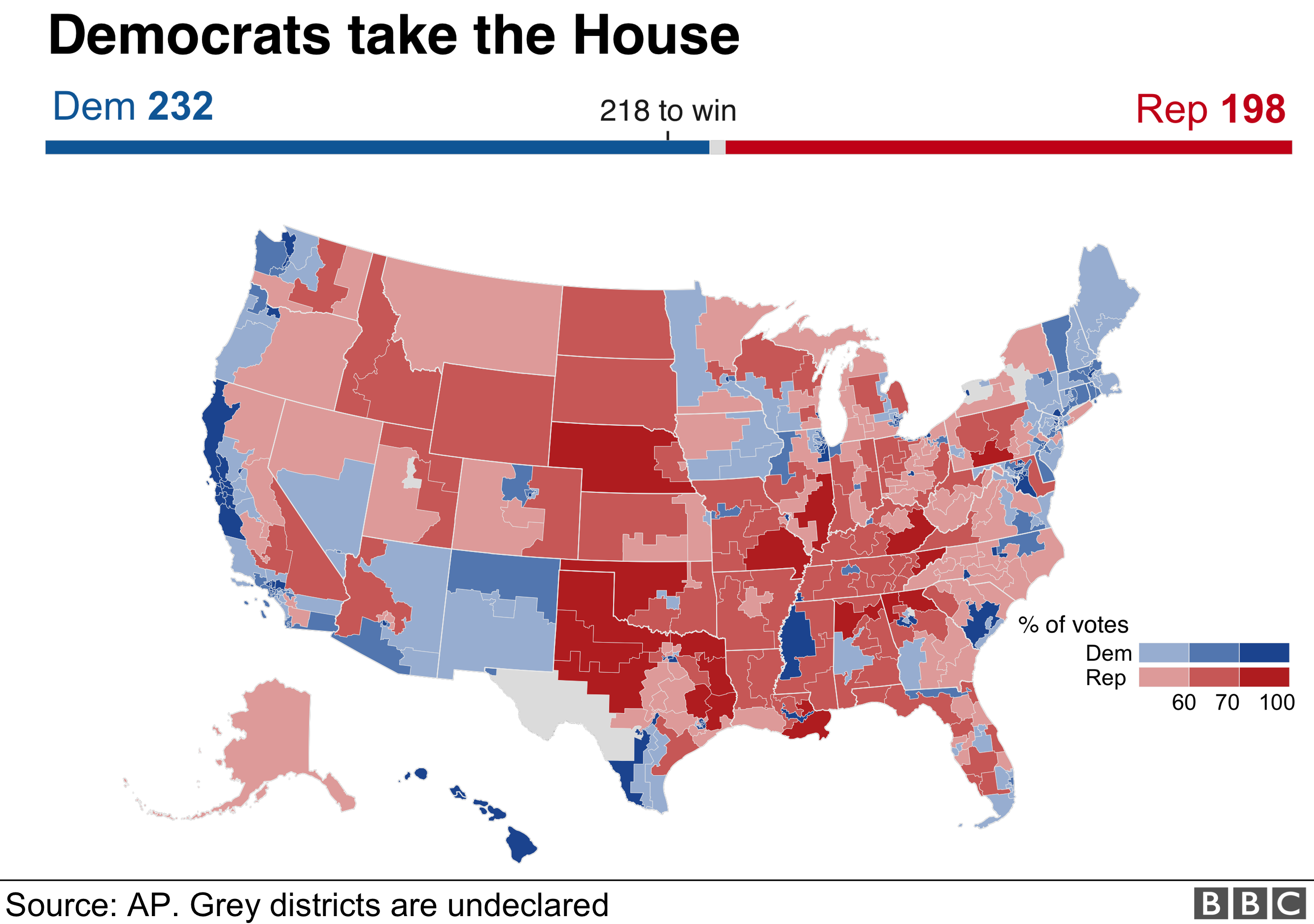
In the USA we saw Trump lose the House (which follows population closely) but gain in the Senate (which follows land/space more closely).  He’s here to stay, folks, and he represents a sizeable portion of the USA – like it or not.

Image result for donald trump by state 2018 mid term results

Likewise in the UK, while the polls have shifted slightly in favour of Remain, despite everything, a sizeable portion of the UK (over 40%) appears to still prefer to Leave the EU, almost whatever happens.  We have a messed up political situation, like it or not.

In the meantime markets have been rumbling around.  At one point mid month I breached my maximum drawdown, and was mentally preparing a blog post about it.  But in the end the US markets had a last minute jump up, for no particular reasons, with some of the most bruised stocks from Ouch-tober showing the sharpest gains.

As it turns out, my diversified portfolio’s large exposure to the USA has helped me turned in a positive performance this month – though it could easily have gone the other way.

Australia deserves a mention.  I haven’t been following it closely this month but its currency gained over 3% on the pound, but its equity index lost almost the same value.  I assume this is a pure currency move, with overseas investors holding the value of the equity markets stable in USD/etc terms.  I haven’t been following Oz closely this month so any additional insights (from @grasmi, perhaps?) would be helpful.

UK bonds also took something of a tumble.  The ‘index’ I track is the corporate bond benchmark, but in fact my fixed income exposure is now more Treasuries than corporates so I should revisit this soon.  In any case, both were hit – my Index Linked Gilt holding was a significant drag on my portfolio.

2018 11 FIREvLondon markets weighted

Continue reading “November 2018 returns” →

Ouch-tober 2018

I have to take my hat off to Theresa May for her performance in October.  Dancing (well, jiving, at least).  On stage.  To kick off her make-or-break appearance at the Tory conference.  That lady has balls.

The big news this month has been foreign.  Alien, even, in the case of another lady with balls – Jodie Whittaker (“Why are you calling me Madam?”) breaking the Doctor’s glass ceiling.

201b083131874d9b1476d9d7029f0302

We’ve had Saudi Arabia in the news for much of the month, for some gruesome reasons. We’ve had foreign governments getting a whipping in Germany or, Royal visit notwithstanding, losing their majority in Oz.  We’ve had the USA administration pulling out of a Russian nuclear arms treaty.

And of course, we’ve had the major geopolitical upheaval that is a new phone from the most important FAANG.

I suppose a quick recap of the worldwide developments would, on balance, suggest downward pressure on the markets.

I really don’t think however that Doctor Who, returning to Earth after a prolonged absence and reviewing  recent developments, would expect such a brutal, consistent month in the equity markets.  Everywhere.

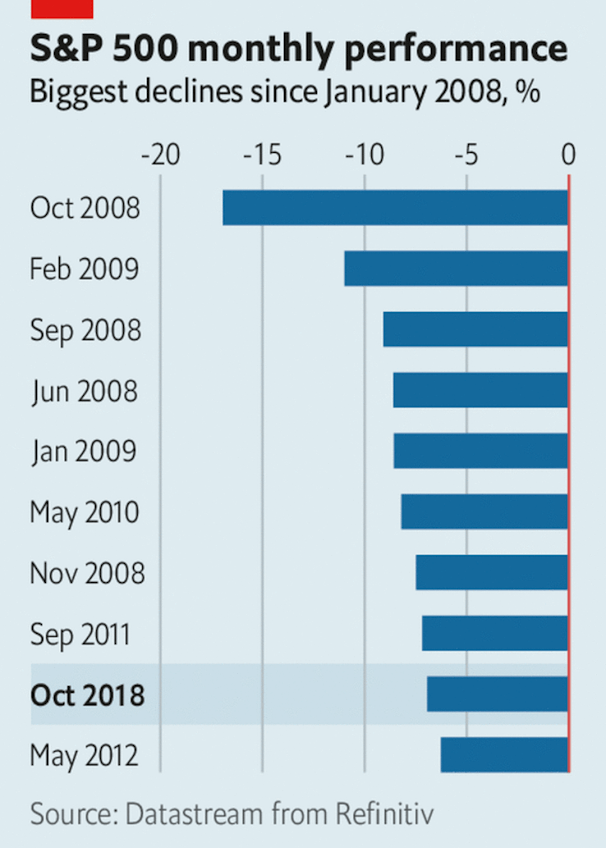
October saw the biggest market drops since my monthly portfolio tracking began in January 2013.  In fact The Economist says October saw one of the top 10 biggest monthly falls in the S&P 500 since the 08/09 crisis.

2018 10 biggest monthly falls Economist
S&P 500 monthly performance; biggest declines since Jan 2008

The Sunday Times shows the worst months for FTSE since the 1960; October 18 isn’t one of the worst 10 but most of the worst ones were more than 30 years ago!

Worst months for UK stock market since 1966 (Source: Sunday Times)

What was clear, as October drew on, was that everything seemed to be falling.  Asian markets have had a tough year already, largely due to Trump trade spats.  European equities have similarly faced trade headwinds.  But now the USA, Oz etc fell sharply too. The Sunday Times has a nice graph in fact:

How FTSE compared with other global stockmarket indices in October 2018 (Source: Sunday Times)


Most noticeable for some of us was the big drop in tech stocks.  Some FAANGs had fallen 20% at points; only AAPL seemed relatively immune from the sharp change in sentiment.

2018 10 FAANG stocks

Amidst the hysteria, you’d have been hard pushed to notice that bonds were relatively unaffected by this carnage.  UK corporate bonds actually went up almost half a percent.  For once, correlations didn’t all converge.

2018 11 02 Tweet wow bonds

Currency movements deserve a brief mention too.  For UK investors October was another month of big Brexit-driven swings.  The pound rose against the USD above £1:$1.32 at one point, before falling to £1:$1.27 where it pretty much finished the month.  The dollar won the October currency battle, which took the edge off the S&P being the biggest casualty in the equity contest.

2018 10 FIRE v London market returns weights

Continue reading “Ouch-tober 2018” →